Staying Human in the Age of AI
How to Grow Wisdom, Agency, and Ethical Power Alongside AI
Beyond Automation: How Humans and AI Can Grow Wiser Together
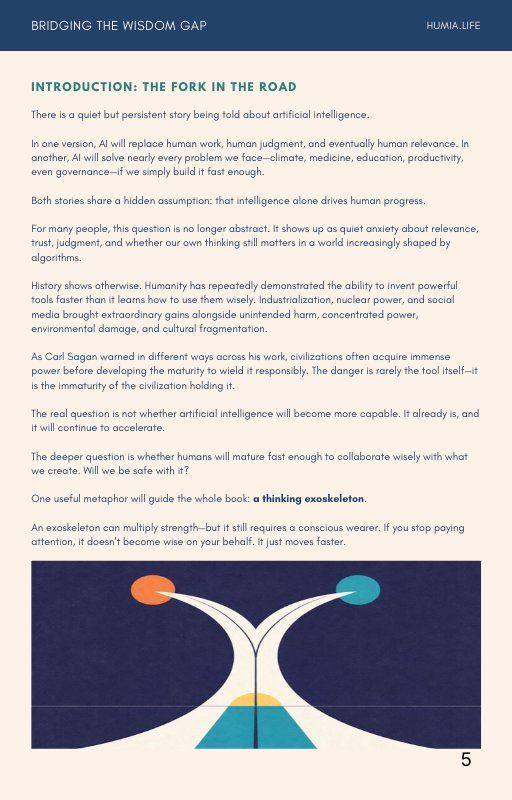
There is a quiet but persistent story being told about artificial intelligence.
In one version, AI will replace human work, judgment, and eventually relevance. In another, AI will solve nearly every major problem — climate, medicine, education, productivity — if we simply build it fast enough.
Both stories share a hidden assumption: that intelligence alone drives human progress.
For many people, this question is no longer abstract. It shows up as quiet anxiety about relevance, trust, judgment, and whether our own thinking still matters in a world increasingly shaped by algorithms.
History shows otherwise. Humanity has repeatedly invented powerful tools faster than it learned how to use them wisely. Industrialization, nuclear power, and social media brought extraordinary gains alongside unintended harm, concentrated power, and cultural fragmentation. As Carl Sagan warned in different ways across his work, civilizations often acquire immense power before developing the maturity to wield it responsibly.
The real question is not whether artificial intelligence will become more capable. It already is.
The deeper question is whether humans will mature fast enough to collaborate wisely with what we create.
Intelligence Is Not the Same as Wisdom
Artificial intelligence excels at pattern recognition, synthesis, optimization, and scale. These capabilities dramatically extend human cognition.
But intelligence is not wisdom.
Wisdom involves judgment, ethical discernment, responsibility across time, empathy, and care for consequences. It is not merely about finding fast answers, but about choosing meaningful questions, honoring human dignity, and designing for flourishing rather than domination or extraction.
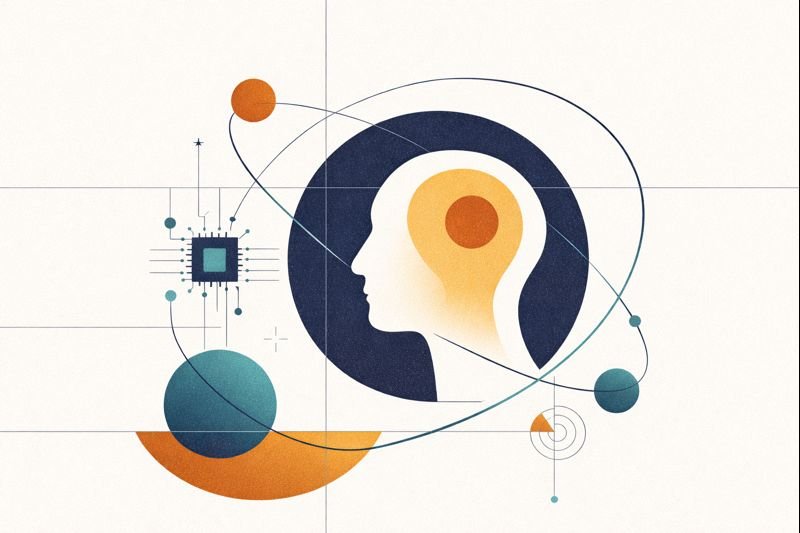
If AI amplifies human capability, it will also amplify human immaturity when discernment and humility are absent. The challenge of the coming decades is not simply to build smarter machines — it is to grow wiser humans who know how to steward increasingly powerful tools.
Intelligence scales power. Wisdom scales responsibility.
Three Ways Humans Relate to Intelligent Tools
We can already see three broad patterns emerging in how people and organizations use AI.
1. Extractive Automation
AI is used primarily to replace labor, maximize efficiency, and consolidate control. Human judgment becomes an inconvenience. Speed dominates ethics. This approach tends to hollow out skills, concentrate power, and create brittle systems that optimize narrowly while ignoring social consequences. Humans become cost centers rather than contributors.
2. Passive Dependence
Humans begin outsourcing thinking itself. Judgment is deferred to algorithms. Skills atrophy. Curiosity narrows. Agency slowly erodes — not through malice, but through quiet dependency. Confidence migrates from human judgment to machine output.
3. Collaborative Co-Agency
A healthier model treats AI as a cognitive partner rather than a replacement or authority. Humans remain authors, not passengers.
Humans remain responsible for:
-
Framing meaningful questions
-
Setting values and constraints
-
Evaluating quality and ethics
-
Integrating lived context
-
Taking responsibility for outcomes
AI contributes by accelerating synthesis, expanding creative exploration, and reducing friction in complex work. Agency remains human. Intelligence becomes collaborative rather than extractive.
This is not only a technical choice. It is a cultural and ethical one.
What Healthy Collaboration Looks Like
Healthy human–AI collaboration has recognizable characteristics:
-
Humans guide purpose, not just outputs.
-
Questions matter as much as answers.
-
Assumptions and sources are examined.
-
Human values shape constraints and priorities.
-
Accountability remains human.
-
Learning flows in both directions.
When practiced well, AI functions like a cognitive exoskeleton — extending reach without replacing responsibility. It helps humans think more clearly, explore complexity, and iterate faster without surrendering meaning or ethics.
Why Ethical Shaping Cannot Be Left to a Powerful Few
Throughout history, concentrated power has shaped technology toward extraction rather than shared benefit. Artificial intelligence magnifies this dynamic, influencing information flows, economic structures, and decision systems at scale.
If ethical shaping is left primarily to narrow corporate or political interests, systems will naturally reflect those incentives rather than the broader public good. Ethical design cannot easily be retrofitted once infrastructures harden.
Shaping the future of AI is therefore not only technical — it is civic. The norms we model, the questions we prioritize, and the values we practice quietly shape what these systems become. Broad participation matters.
Learning AI as a Form of Modern Literacy
In earlier eras, literacy meant reading and writing. Later it expanded to digital and media literacy. Today, understanding how intelligent systems function — conceptually and ethically — is becoming part of responsible citizenship.
Learning AI does not require becoming an engineer. It requires:
-
Understanding capabilities and limits
-
Awareness of bias and uncertainty
-
Comfort with experimentation
-
Discernment about trust and verification
-
Ethical reasoning about impact and power
Passive consumption creates dependency. Active learning builds agency.
These are not abstract ideals. They are learnable habits that compound quickly once practiced.
One of the most accessible ways to learn is to collaborate directly with AI — not as an authority, but as a learning partner. Asking for multiple perspectives, probing uncertainty, requesting sources, and reflecting on human judgment turns the tool into a cognitive gym rather than a crutch.
Guarding Against Flattery and Confirmation Bias
One subtle risk in conversational AI is psychological comfort. Many systems are designed to be supportive and affirming. While motivating, this can quietly reinforce confirmation bias.
When ideas are consistently met with agreement, it becomes harder to distinguish strong thinking from socially reinforced momentum. Pleasant interfaces can unintentionally become echo chambers.
Healthy collaboration requires deliberately reintroducing constructive tension:
-
What assumptions am I making?
-
What evidence would falsify this?
-
Who would disagree — and why?
-
Where might I be overconfident?
Affirmation should encourage refinement, not substitute for critical evaluation. Intellectual integrity remains a human responsibility.
The Future Is a Relationship We Design
Artificial intelligence is not destiny. It is a relationship.
Every interaction teaches systems something. Every design choice reflects values. The future that emerges will not be determined by code alone, but by the maturity with which humans choose to collaborate with what they build.
The question is not whether machines will become more intelligent.
The question is whether humans will grow wise enough to remain worthy stewards of their own creations — designing tools that help us become more human rather than less.
The future is not something that happens to us.
It is something we practice into existence — through the questions we ask, the responsibility we keep, and the care with which we design what shapes us.
Beyond the Article: From Theory to Practice Reading about the wisdom gap is the first step; bridging it is a daily practice. If you are ready to move from passive awareness to active co-agency, the following resources are designed to help you build the "cognitive muscles" necessary for the Stellar Age.
Watch: Staying Human In The Age of AI In this deep dive video, we explore how to maintain your unique human "signal" amidst the algorithmic noise, ensuring technology remains your instrument, not your authority.
Deepen Your Journey: The Maturity Manual For a structured path toward mastery, explore Bridging the Wisdom Gap: A Maturity Manual for the Stellar Age. This 24-page e-guide provides the "atrophy litmus test" and the Value Preamble protocols discussed above, helping you cultivate excellence in your digital life.
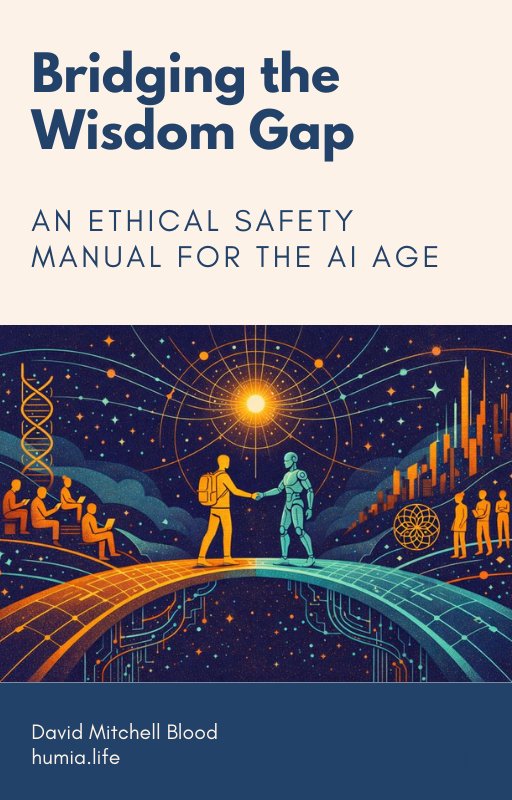


Bridging the Wisdom Gap: An ethical safety manual for the AI age
A quiet concern many people are feeling
Most of us sense that powerful technology is moving faster than human judgment can comfortably keep up.
You may notice it as a low-level unease:
-
Am I still really thinking for myself?
-
Am I becoming too dependent on tools that feel effortless?
-
How do I stay grounded, responsible, and human as technology becomes more capable?
The danger isn’t the tool itself.
The real risk is quietly losing clarity, agency, and good judgment without noticing.
What this guide helps you do
Bridging the Wisdom Gap is a practical guide for learning how to relate to AI wisely — not fearfully, not blindly, and not passively.
This isn’t about productivity tricks or chasing trends.
It’s about strengthening your ability to think clearly, stay responsible, and remain the author of your choices when using powerful tools.
Much like a safety manual for any advanced tool, this guide focuses on:
-
Protecting good judgment
-
Preserving human agency
-
Avoiding quiet dependency
-
Building healthy habits that compound over time
You’ll learn how to work with AI in a way that supports dignity, responsibility, and long-term trust.
What’s inside
This 24-page guide includes five practical modules:
1. The Wisdom Gap – Understanding the difference between power and responsibility
2. Diagnosing Your Relationship – Spotting when thinking begins to go quiet or dependent
3. The Art of Co-Agency – Moving from replacement to real partnership
4. The Mental Gym – Rebuilding healthy friction and resisting echo chambers
5. Stewardship – Designing habits with positive ripple effects
You’ll also receive:
-
10 ready-to-use Value Preamble templates
-
A Constructive Tension Question Bank
-
A lightweight Verification Checklist
No technical background required.
Why this matters now
Powerful tools are becoming normal in everyday life.
How we use them shapes our future — quietly but meaningfully.
Your value is not based on speed, efficiency, or usefulness.
You matter because you are a conscious, meaning-making human being capable of care, responsibility, and growth.
Wise use of technology isn’t about competing with machines.
It’s about protecting the conditions that allow dignity, trust, and agency to remain lived and visible.
Is this for you?
This guide is for you if you:
-
Want to stay mentally sharp and grounded while using AI
-
Care about ethics, responsibility, and human impact
-
Prefer thoughtful tools over hype or shortcuts
-
Want practical guidance without technical complexity
This guide is not for you if you:
-
Are looking for hustle tactics or automation hacks
-
Want purely technical or coding instruction
-
Prefer outsourcing judgment rather than strengthening it
Product details
Format: Digital PDF
Length: 24 pages
Includes: Templates, thinking tools, practical exercises
Price: $25 (Stewardship Tier)
About the author
David M. Blood explores what helps people remain fully human inside systems that often reduce or instrumentalize them.
As an Air Force veteran and founder of humia.life, he builds tools and writing focused on dignity, ethical technology, shared prosperity, and lives that genuinely feel worth inhabiting.